
Navigating CE, FCC, and RoHS Certifications for Audio Imports to EU & US
Navigating mandatory audio certifications like CE, FCC, and RoHS is essential for international importers, distributor brands, and procurement directors scaling in the EU and US markets.
Customs seizures, heavy fines, inventory destruction, or sudden marketplace bans (such as listings removals on Amazon) are constant threats when audio gear fails to meet regional mandatory standards. Whether you are sourcing active studio monitors, wireless Bluetooth speakers, commercial amplifiers, or professional microphones, understanding CE, FCC, and RoHS certifications is essential for smooth cross-border supply chain operations.
As a dedicated microphone and bluetooth speaker manufacturer established in 2013, Shenzhen Xiexunda Technology Co., Ltd. provides a detailed breakdown of these mandatory audio certifications, their technical scope, and how our factory guarantees complete compliance for your OEM/ODM orders.
1. The Core Compliance Requirements: EU vs. US Markets
Different economic regions enforce distinct legal frameworks to safeguard consumer health, wireless spectrum integrity, and environmental sustainability.
| Certification | Target Market | Governing Authority | Primary Focus | Mandatory Status |
| CE Mark | European Union / EEA | European Commission | Health, Safety, EMC, Spectrum | Mandatory |
| RoHS Directive | European Union / EEA | EU Directives (2011/65/EU & 2015/863) | Hazardous Substances in Electronics | Mandatory |
| FCC Mark | United States | Federal Communications Commission | Electromagnetic Interference & Radio Spectrum | Mandatory |
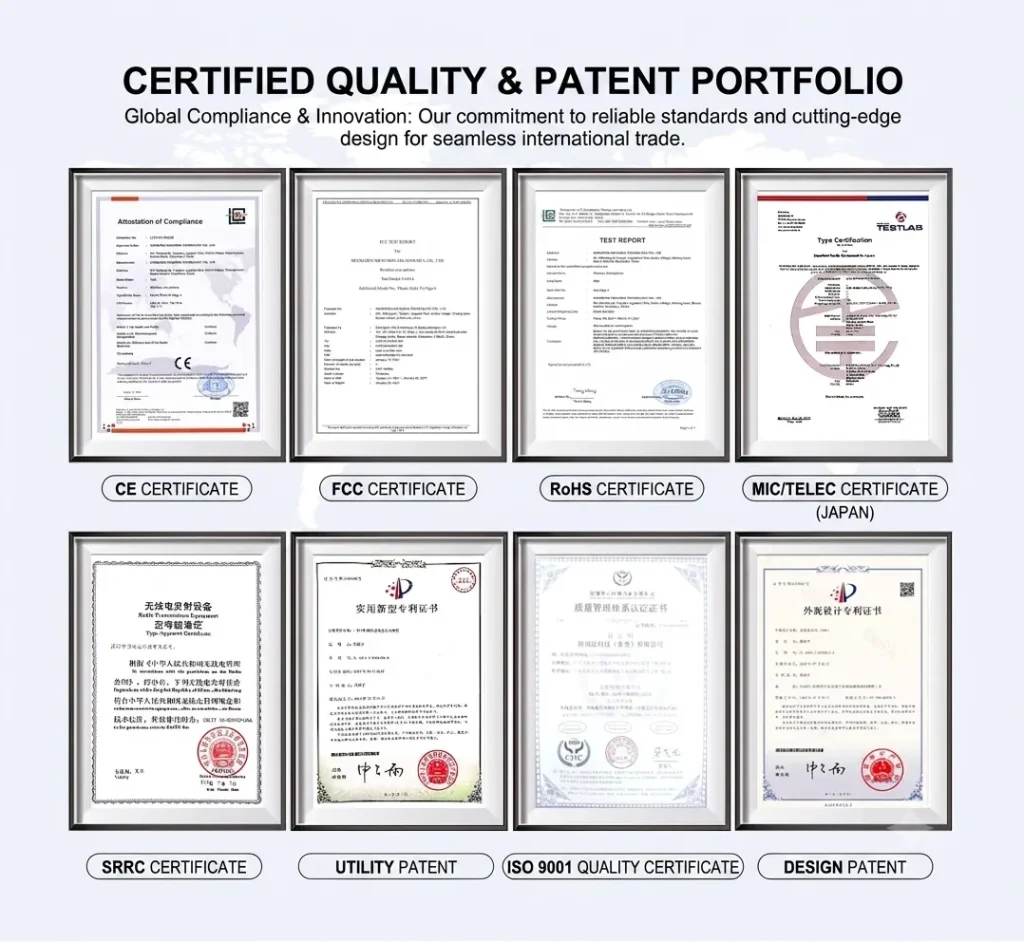
2. Essential Audio Certifications for EU & US Markets
The CE (Conformité Européenne) mark is a mandatory conformity marking for products sold within the European Economic Area (EEA). For audio equipment, CE is not a single test; rather, it is an umbrella declaration that covers several underlying directives.
Key CE Directives for Audio Gear:
- EMC Directive (2014/30/EU): Ensures that audio equipment (such as mixers, amplifiers, and active speakers) does not generate excessive electromagnetic noise that interferes with other electronics, and remains immune to incoming radio interference.
- Low Voltage Directive (LVD 2014/35/EU): Applies to audio equipment operating with an input or output voltage between 50–1000V AC or 75–1500V DC. It ensures electrical safety, preventing electrical shocks, short circuits, and fire hazards.
- Radio Equipment Directive (RED 2014/53/EU): Applies to any audio device utilizing wireless connectivity (Bluetooth, Wi-Fi, 2.4GHz wireless microphones). RED combines radio spectrum efficiency, health safety (SAR), and EMC into a single mandatory framework.
Import Warning: Placing a CE logo on an audio product without a valid Technical Construction File (TCF) and a signed Declaration of Conformity (DoC) from an accredited testing laboratory can result in immediate border retention by EU customs.
3. Demystifying RoHS: Hazardous Substance Restrictions in the EU
While CE focuses on operation and electrical safety, RoHS (Restriction of Hazardous Substances) governs environmental and chemical safety.
Under Directive 2011/65/EU and its amendment Directive (EU) 2015/863 (commonly referred to as RoHS 3), audio equipment imported into the EU must restrict ten specific hazardous substances below strict concentration thresholds:
- Lead (Pb) (< 0.1%) – Common in non-compliant solder and PCB finishes.
- Mercury (Hg) (< 0.1%) – Restricted in display backlights and switches.
- Cadmium (Cd) (< 0.01%) – Restricted in plastics, pigments, and contacts.
- Hexavalent Chromium (Cr6+) (< 0.1%) – Restricted in anti-corrosion metallic coatings.
- Polybrominated Biphenyls (PBB) & PBDE (< 0.1%) – Restricted in flame-retardant plastics.
- Four Phthalates (DEHP, BBP, DBP, DIBP) (< 0.1%) – Restricted in flexible PVC cables, headphone cords, and rubber grommets.
For audio importers, non-compliant rubber cable jackets or lead-based solder on printed circuit boards (PCBs) are the most common causes of RoHS clearance failures.
4. Understanding FCC Certification for the United States Market
To sell audio electronics in the US, compliance with the Federal Communications Commission (FCC) under Title 47 of the Code of Federal Regulations (47 CFR) is legally required. The FCC regulates unintentional and intentional radiators to protect the public radio frequency spectrum.
Classification of Audio Products:
- FCC Part 15 Class B (Unintentional Radiators): Applies to traditional wired audio gear like powered amplifiers, audio interfaces, and DACs that contain internal digital clocks operating above 9 kHz. They must be tested to ensure they do not cause harmful radio frequency interference.
- FCC ID / Intentional Radiators (Part 15C): Applies to wireless audio equipment, including Bluetooth headphones, wireless microphone systems, and smart speakers. These devices require a formal FCC ID issued through an accredited Telecommunication Certification Body (TCB).
5. How Shenzhen Xiexunda Guarantees Compliance for Your Orders
Navigating audio certification paperwork can be complex and risky for importers. At Shenzhen Xiexunda Technology Co., Ltd., we integrate compliance directly into our manufacturing pipeline rather than treating it as an afterthought.
Our Quality & Compliance Assurance Process:
- Source Level Material Screening: All raw components—from IC chips to plastic enclosures and PVC audio cables—undergo strict incoming material inspection (IQC) to ensure 100% RoHS compliance.
- Lead-Free SMT Production Lines: Our factory utilizes lead-free soldering processes and automated optical inspection (AOI) across all SMT surface-mount lines.
- Pre-Compliance In-House Testing: Before sending new audio designs to third-party labs (such as SGS, TUV, or Intertek), our engineering team conducts pre-compliance EMC and audio signal stability testing to eliminate failure risks.
- Complete Technical Documentation Support: We supply our B2B partners with full test reports, official Certificates of Conformity (CoC), FCC ID registrations, and signed Declarations of Conformity (DoC) to ensure seamless customs clearance in North America and Europe.
Conclusion & Partnering with Us
Importing audio equipment into the EU and US markets requires a manufacturing partner who understands both high-fidelity sound engineering and rigorous international law. Failure to present valid audio certifications can cause severe customs clearance delays
With over a decade of manufacturing experience, Shenzhen Xiexunda Technology Co., Ltd. Our factory ensures all products meet mandatory audio certifications before mass production.

Ready to Scale Your Microphone And Bluetooth Speaker Product Line?
Contact our OEM/ODM export team today to request complete product compliance dossiers, sample evaluations, or factory audit details.
- Email: emily@xxd2021.com
- Website: https://www.xiexunda.com/
- Factory Address: Shenzhen, Guangdong Province, China
